Military Canvas Tents: A Practical Guide to Types, Materials, and Sourcing
Military canvas tents have been around in one form or another for centuries. The core idea has not changed much — heavy fabric over a rigid frame, designed to withstand rough handling and bad weather. What has changed is the engineering: modern military tents use treated cotton canvas with specific GSM weights, hot-dip galvanized steel frames, and designs optimized for rapid setup in field conditions.
Whether you are a defense procurement officer sourcing for an army, an outdoor outfitter looking for durable commercial tents, or someone who wants a tough tent for a hunting camp, here is what you need to know about military canvas tents.
Types of military tents
Military tents come in several configurations, each designed for a different purpose. Here are the main ones we manufacture.
Center pole tent
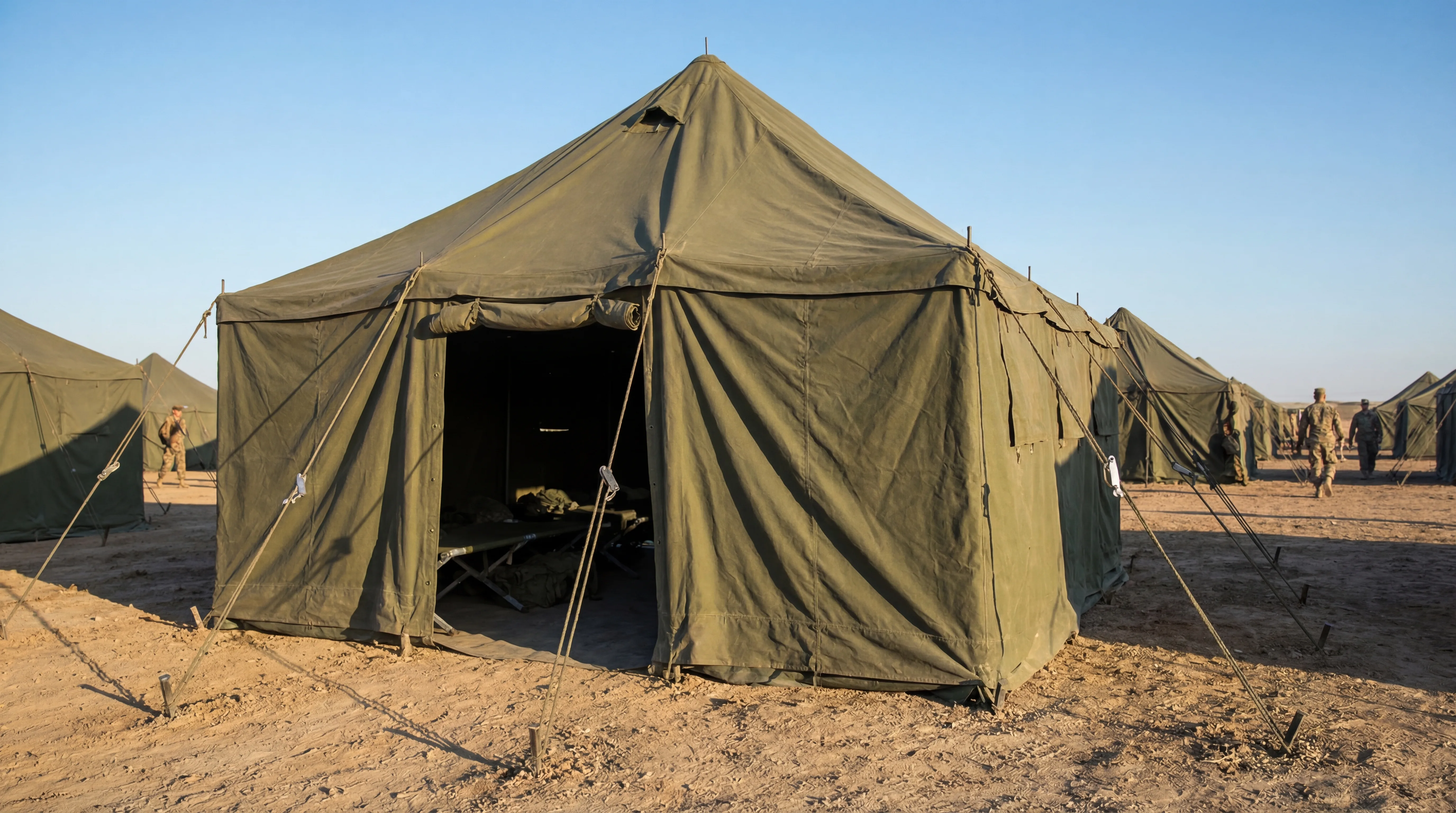
This is the classic military tent silhouette — a single tall center pole with the canvas draped over it and staked out at the edges. Sizes range from small (3m x 3m) to large (5m x 5m). They are simple to erect, pack relatively small, and work well for 4-10 person bivouacs.
The center pole design has been standard military issue for over a hundred years because it works. Two soldiers can put one up in 15 minutes. The main drawback is that the center pole takes up interior space and limits headroom at the edges.
Frame / marquee tent
Frame tents (also called marquee tents in military contexts) use an external or internal frame of interconnecting steel poles instead of a center pole. This gives you a flat ceiling and usable space all the way to the walls. Sizes typically start at 5m x 8m and go up to 10m x 20m or larger.
These are used as command posts, mess halls, medical stations, and equipment storage. The trade-off is weight and setup time — a large frame tent can weigh 300+ kg and take a team of 6-8 soldiers a couple of hours to erect. But you get a proper working space with full headroom everywhere.
Modular / extensible tent
Modular tents are designed to connect end-to-end. You set up one module, then bolt another onto the end of it, and keep extending until you have the length you need. Each module is typically 4m to 6m wide and 4m to 6m long.
This design is popular with armies that need to create barracks, field hospitals, or staging areas of variable size. You ship the same standardized modules and configure them on-site. We produce modular tents that connect with zippered or bolted interfaces so you can expand or contract the structure as the mission changes.
Ridge tent (general purpose)
The ridge tent is an A-frame design with a horizontal ridge pole running the length of the tent, supported by two vertical poles at each end. It is the simplest framing method and produces a classic triangular cross-section. Most military ridge tents are in the 4m x 6m to 5m x 8m range.
You see these as general purpose (GP) tents — sleeping quarters, storage, briefing rooms. They are faster to set up than frame tents but smaller. The ridge tent is a good middle ground between the simplicity of a center pole and the usable space of a frame tent.
Canvas weights and materials
Military tents use heavier canvas than civilian or humanitarian tents. The standard weight for military-grade cotton canvas is 510 GSM (grams per square meter), sometimes referred to as 15-ounce canvas. Some specifications call for 440 GSM (13-ounce) for smaller tents or 580 GSM (17-ounce) for tents that need extra durability.
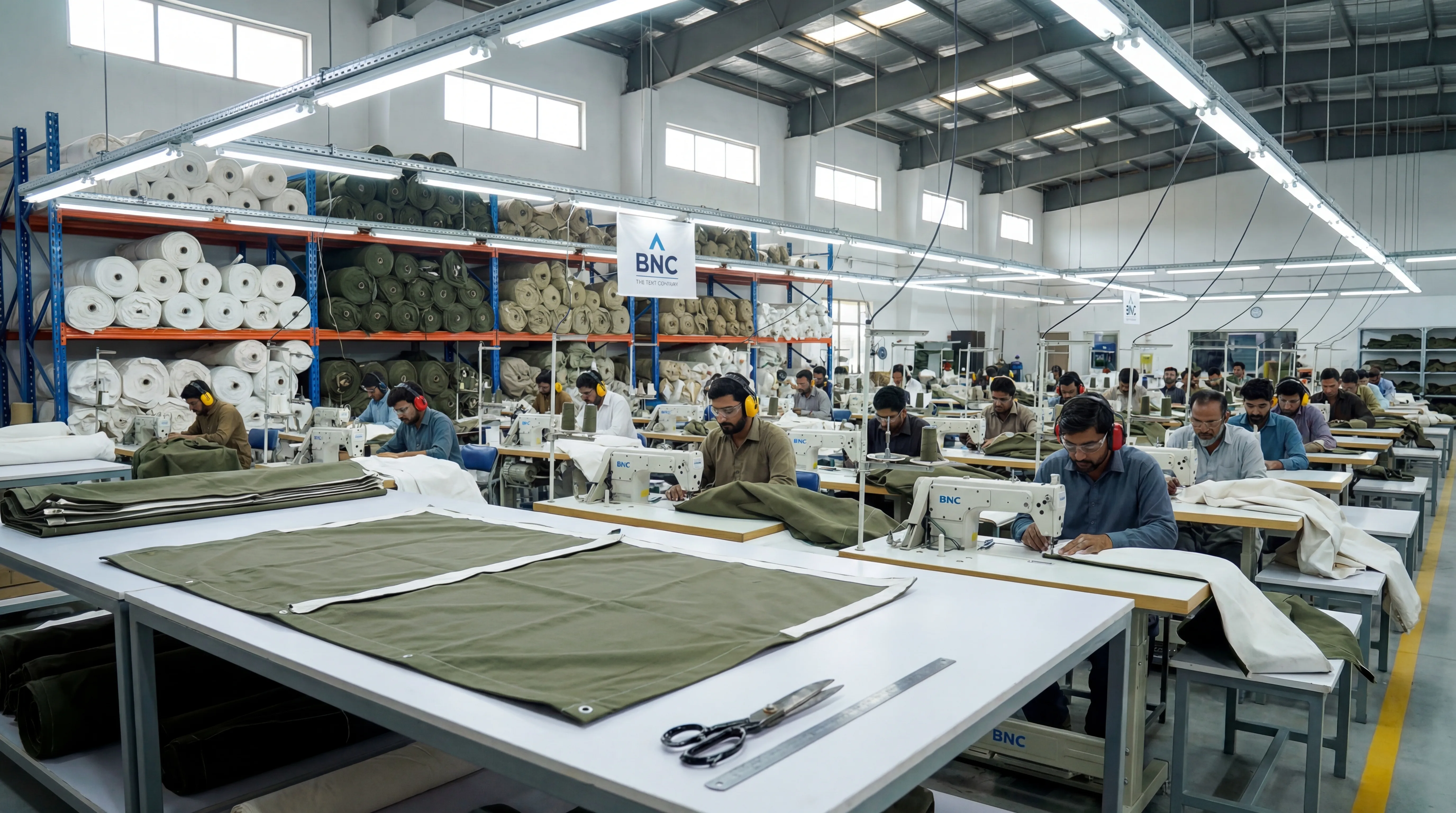
At our military tent production line, we stock 440, 510, and 580 GSM canvas. The 510 GSM is what most defense clients specify because it balances weight with durability. A tent made from 510 GSM canvas will handle years of field use — repeated setup and teardown, rain, wind, sun — without the fabric failing.
The canvas is treated for water resistance, rot resistance, mildew resistance, and (depending on the specification) fire retardancy. Military specs in some countries require the canvas to be self-extinguishing, meaning it chars but does not sustain a flame when the ignition source is removed.
Color options
The three standard colors for military tents are:
- Olive green (OG): The default for most armies. Good visual camouflage in temperate and tropical environments. This is what you picture when you think "military tent."
- Sand / khaki / desert tan: Standard for arid environments. Used widely by forces operating in the Middle East, North Africa, and Central Asia.
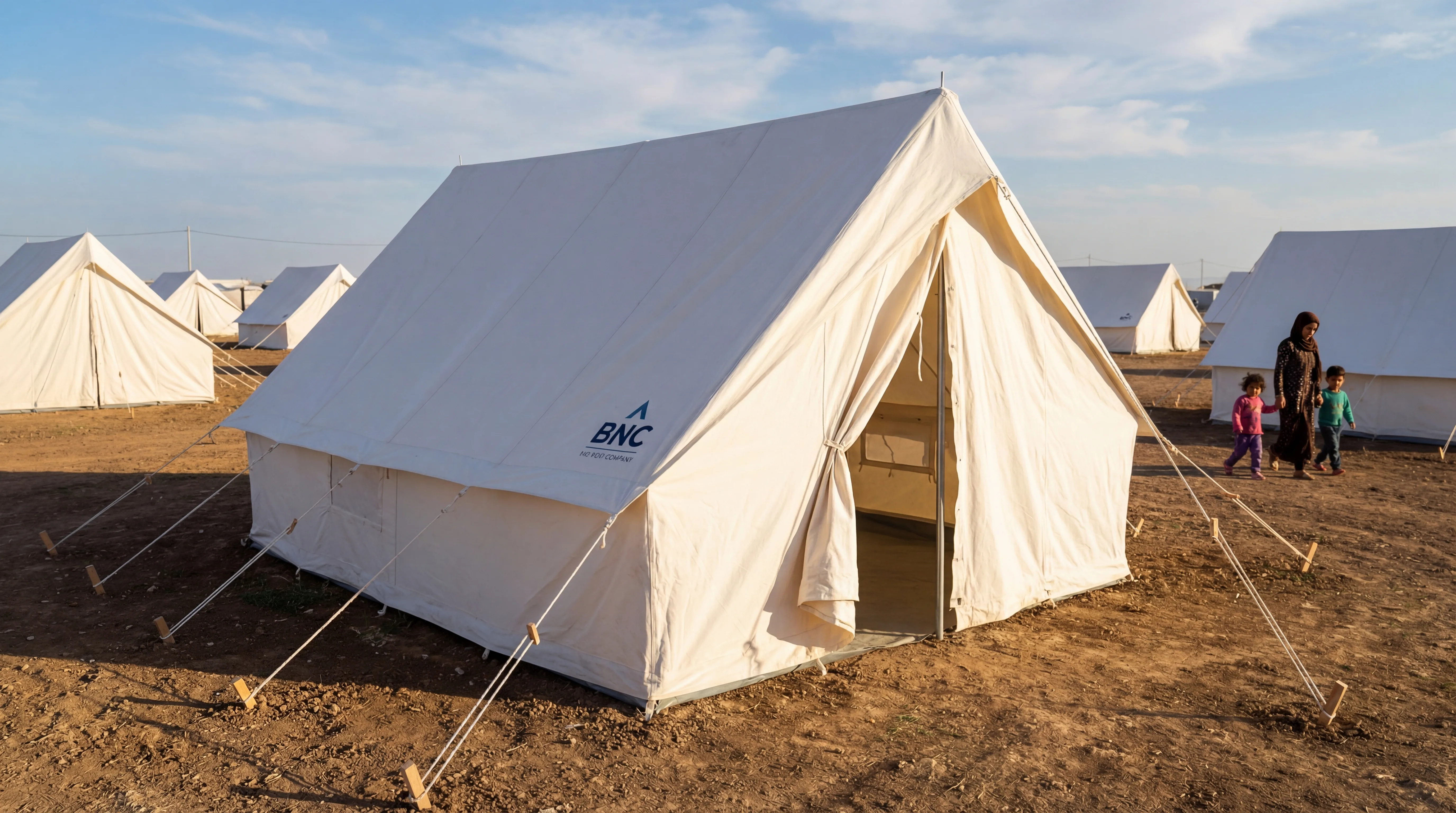
- White: Used for non-combat purposes — training camps, UN peacekeeping operations, and military-administered disaster relief deployments. White reflects heat, which is an advantage in hot climates.
We dye canvas in-house, so custom colors are possible. We have done camouflage patterns, navy blue for naval installations, and grey for air force specifications. The dye is applied before the waterproofing treatment so it bonds permanently to the fibers.
Frame materials: why hot-dip galvanizing matters
Every military tent frame we produce uses hot-dip galvanized steel. This is worth explaining because there is a significant difference between galvanizing methods.
Hot-dip galvanizing means the steel poles are submerged in a bath of molten zinc at about 450 degrees Celsius. The zinc bonds to the steel surface and forms a thick, uniform coating (typically 70-85 microns). This coating protects against corrosion even when scratched or dented, because the surrounding zinc corrodes sacrificially to protect the exposed steel.
Electro-galvanizing deposits a much thinner zinc layer (5-25 microns) using an electric current. It looks shinier but provides far less corrosion protection. A scratch on electro-galvanized steel will start rusting within weeks in humid conditions.
For military tents that get hauled around in trucks, set up on mud, and taken down by soldiers who are not particularly gentle, hot-dip galvanized is the only sensible choice. The upfront cost is higher, but the poles last 5-10 times longer.
How to source: manufacturer vs surplus
If you need military tents, you have two main options: buy new from a manufacturer or buy surplus.
Buying from a manufacturer
When you buy from a manufacturer like us, you get tents built to your exact specification — size, canvas weight, color, frame type, accessories. You also get consistency. Every tent in a batch of 500 will be identical. This matters for military logistics because standardization means any component from any tent fits any other tent in the fleet.
The minimum order quantity (MOQ) is a consideration. Most manufacturers, including us, have MOQs starting at 20-50 units for standard models. For custom specifications, MOQs may be higher because of the setup costs for new cutting patterns and custom treatments.
Lead time for new production is typically 3-6 weeks depending on quantity and complexity. If we have your model in stock, we can ship much faster.
Buying surplus
Military surplus tents are cheaper upfront but come with risks. You do not know the history of the tent — how many times it was set up and taken down, how long it sat in storage, whether the waterproofing treatment is still effective, or if the frame components are all present and undamaged.
Surplus works fine if you are buying a tent for a personal hunting camp and can inspect it before purchase. For institutional procurement where you need reliable, consistent, warranty-backed products, new from a manufacturer is the way to go.
What to look for when evaluating a military tent
Whether you are buying one tent or a thousand, check these things:
- Canvas GSM: Get the actual weight tested, not just the stated weight. Some suppliers overstate GSM.
- Seam construction: Double-stitched seams with sealed tape underneath. Single-stitched seams will leak.
- Galvanizing method: Confirm hot-dip, not electro. Ask for the coating thickness in microns.
- Hardware quality: Check pegs, guy-ropes, and tensioners. Cheap hardware is the first thing to fail in wind.
- Packing: Military tents should pack into labeled bales or bags that include all components. A tent that arrives with missing poles is useless in the field.
Applications beyond the military
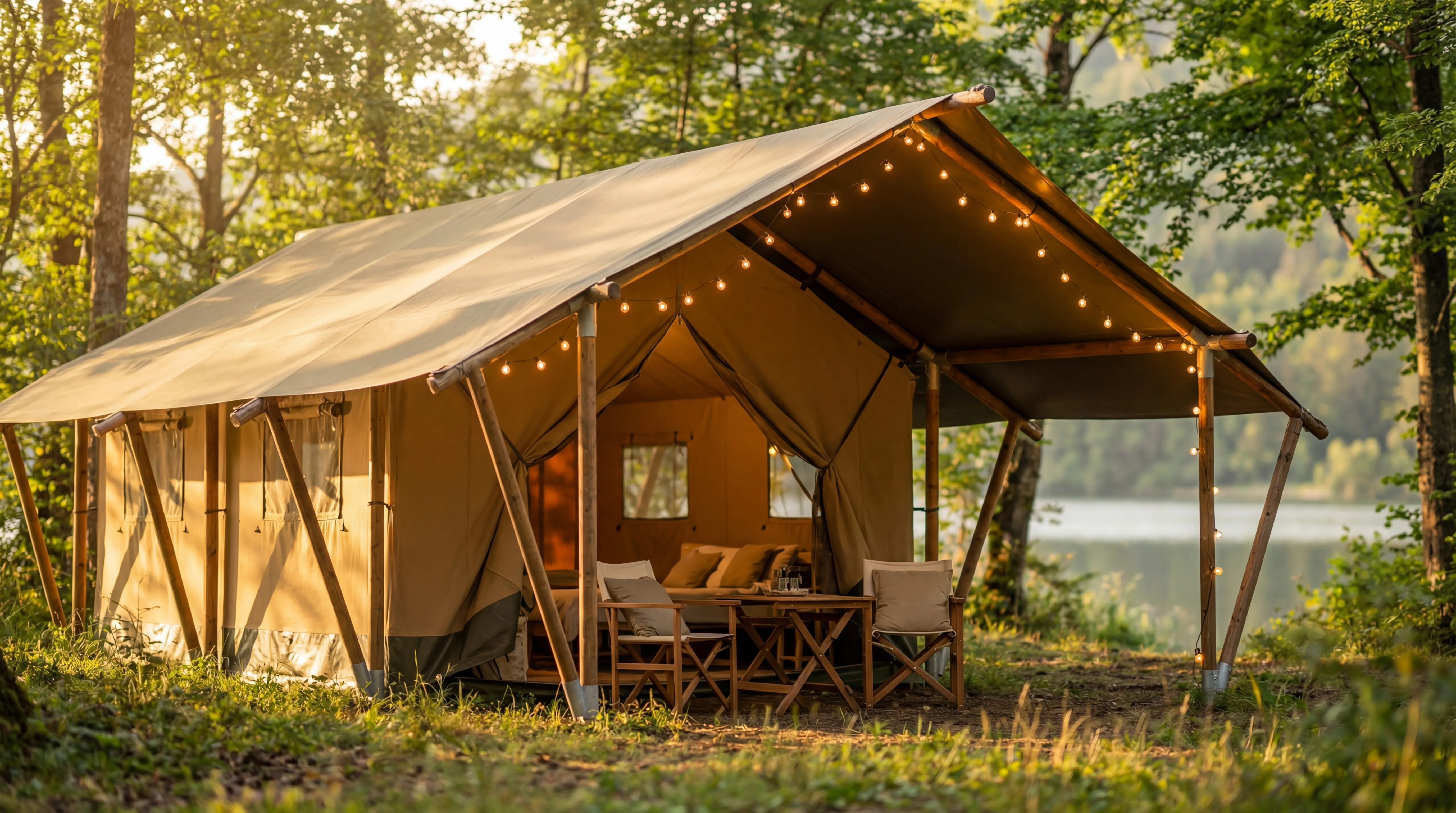
Military-grade canvas tents have become popular outside of defense applications. Outfitters use them as semi-permanent hunting and fishing camps. Event companies use large frame tents for outdoor gatherings. Oil and gas companies use them as field offices in remote locations. Schools and community organizations in developing countries use them as temporary classrooms.
The reason is simple: a well-made military tent is built to survive rough conditions for years. If it can handle an army, it can handle anything you throw at it.
We produce military tents for armed forces across the Middle East, Africa, and South Asia. If you are sourcing military-grade canvas tents — whether for defense or commercial use — we can work with your specifications or recommend the right configuration for your application.