Cotton Canvas vs Synthetic Tents: Which Is Better for Your Use Case?

This is the most common question we get from buyers who are new to tent procurement: should I go with cotton canvas or synthetic? The answer depends entirely on what you are using the tent for, where you are using it, and how long it needs to last.
We manufacture both cotton canvas and synthetic tents. We are not going to tell you one is universally better than the other, because that is not true. But after 30 years of producing tents for military, humanitarian, and commercial clients, we have a clear picture of where each material excels and where it falls short.
Breathability
This is the biggest practical difference between the two materials, and it affects comfort more than almost anything else.
Cotton canvas breathes. Air passes through the woven cotton fibers, allowing moisture to escape from inside the tent and fresh air to circulate in. On a hot day, a cotton canvas tent is noticeably cooler inside than the ambient air in direct sun. The natural evaporative effect of air moving through cotton also helps regulate humidity inside the tent.
Synthetic fabric (polyester, nylon) does not breathe in any meaningful way. The tightly woven plastic fibers and polyurethane waterproofing coating create an airtight shell. In hot weather, this turns the tent into a greenhouse. Interior temperatures in a sealed synthetic tent can exceed outdoor temperatures by 15-20 degrees Celsius. Moisture from breathing and perspiration condenses on the inner walls, creating a damp environment.
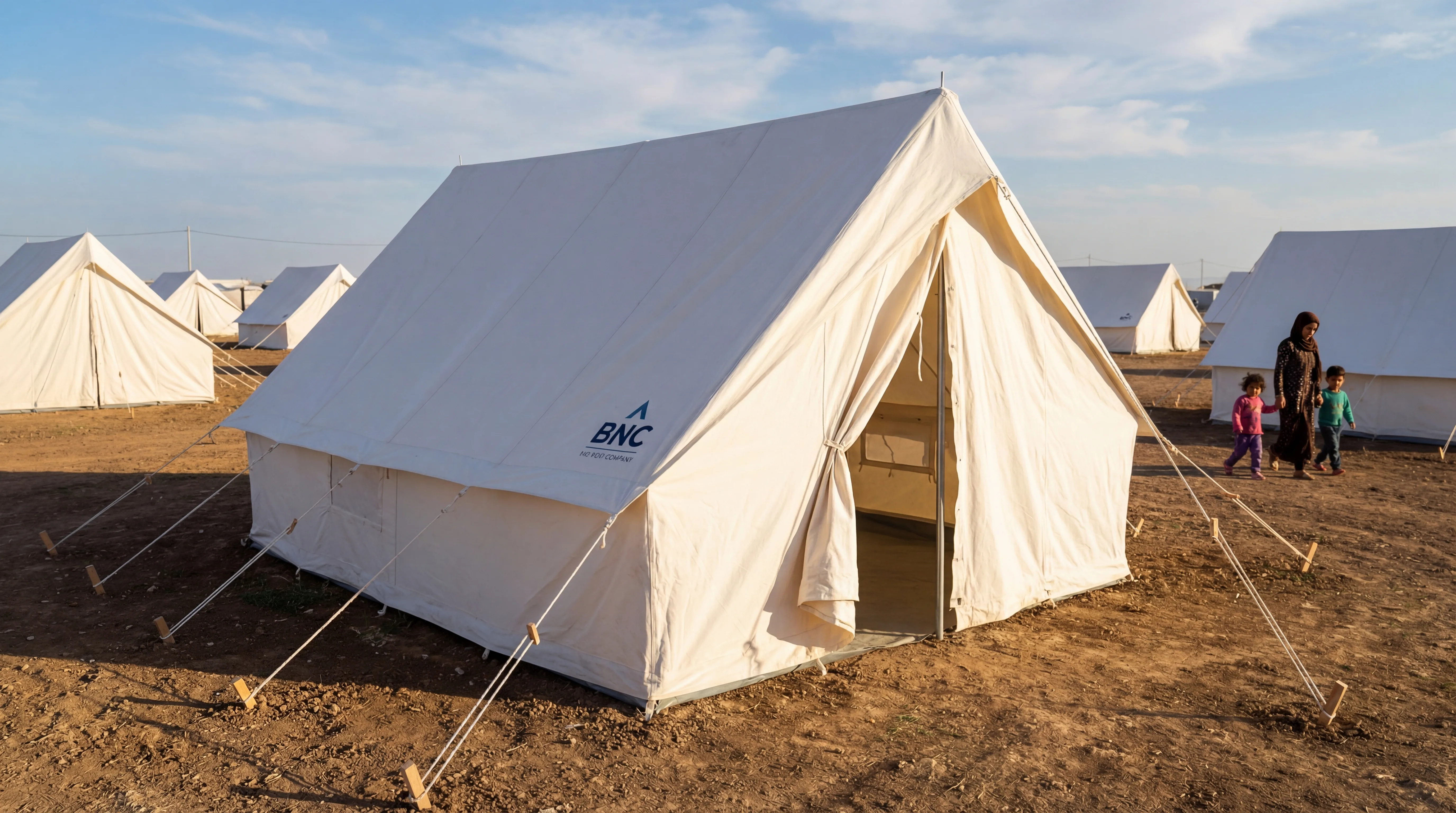
For any application where people will spend extended time inside the tent — sleeping, working, sheltering — breathability matters. This is why humanitarian organizations specify cotton canvas for family shelters in hot climates. When a tent is someone's home for months, the interior environment is a health issue.
Insulation
Cotton canvas is a better insulator than synthetic fabric. The cotton fibers trap small pockets of air within the weave, creating a natural insulation layer. A canvas tent retains heat from a stove or body heat more effectively than a synthetic tent of the same thickness. This is one reason why canvas wall tents remain the standard for winter camping and cold-weather military deployments.
Synthetic tents provide minimal insulation. The thin fabric does almost nothing to slow heat transfer. In cold conditions, a synthetic tent feels nearly the same temperature inside as outside. Some synthetic tents compensate for this with multiple layers or integrated insulation, but these add weight and cost that offset the material's weight advantage.
For winter use or cold-climate deployments, cotton canvas is the clear choice. Our winterized relief tents use double-layer cotton canvas with quilted thermal lining, effective to -20C.
Durability
This comparison requires some nuance, because "durability" means different things in different contexts.
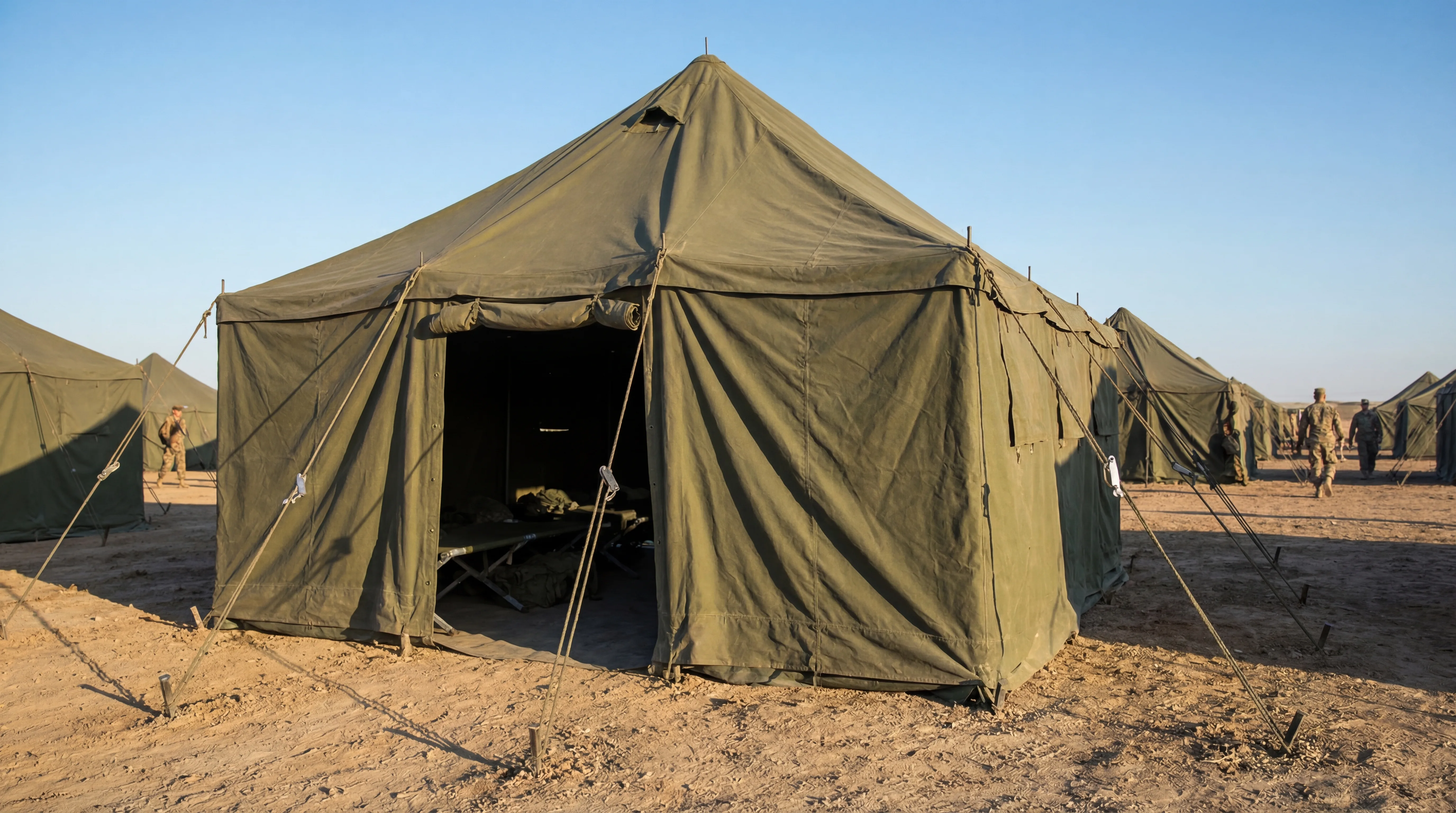
Cotton canvas has high tear strength — once the fibers are woven together at weights of 350 GSM and above, the fabric resists tearing and abrasion well. A properly treated cotton canvas tent will last 3-5 years of continuous outdoor use. With periodic reproofing and proper storage, some canvas tents last 10+ years. Canvas also handles repeated flexing and folding well. We have clients using the same military tents after hundreds of setup-teardown cycles.
The weakness of cotton canvas is biological: it can rot, mildew, or develop fungus if stored wet. Proper treatment and maintenance prevent this, but it requires attention that synthetic fabrics do not.
Synthetic fabric is immune to rot and mildew. You can pack a wet polyester tent away and it will not grow mold (though it will smell terrible). Synthetic fabric also has better UV resistance in its untreated state. However, the waterproof coating (polyurethane) degrades over time with UV exposure and mechanical wear, and once it starts peeling, the tent leaks. The fabric itself also has lower tear resistance per unit weight compared to cotton canvas — a sharp branch or rock that would bounce off 380 GSM canvas will puncture 200 GSM polyester.
For short-term use (weeks to months), synthetic tents hold up fine. For long-term deployments (months to years), cotton canvas lasts longer when properly maintained.
Weight
This is where synthetic wins clearly.
A polyester tent can achieve adequate weather protection at 150-250 GSM. An equivalent cotton canvas tent needs 350-400 GSM. For a family-size tent, this translates to a weight difference of 30-50%. A cotton canvas family tent weighing 85 kg has a polyester equivalent weighing perhaps 45-55 kg.
When you are shipping thousands of tents by air freight, this weight difference translates directly into cost. Air freight rates are charged per kilogram, so lighter tents mean more tents per flight and lower cost per unit delivered. This is the primary argument for synthetic tents in emergency first-response situations where speed of delivery matters more than long-term performance.
For applications where the tent is transported once and stays in place — semi-permanent camps, hunting camps, glamping sites — the weight penalty of canvas is irrelevant.
Fire resistance
This is a safety-critical comparison that does not get enough attention.
Cotton canvas is naturally slow to ignite. When exposed to flame, cotton chars and smolders rather than bursting into flame. It does not produce molten drips. If you pull the flame source away, a cotton canvas tent will usually self-extinguish or continue smoldering slowly, giving occupants time to escape. With fire-retardant treatment, cotton canvas becomes fully self-extinguishing — the char stops spreading as soon as the external flame is removed.
Synthetic fabrics are petroleum-based products. Polyester and nylon melt when exposed to heat and can produce flaming drips of molten plastic. A synthetic tent fire can spread extremely fast and produce toxic fumes (hydrogen cyanide from nylon, carbon monoxide from all plastics). In refugee camps and military camps where tents are close together and cooking fires are common, this is a real danger.
For any application involving open flame (stoves, cooking, heaters) or where tents are in close proximity, cotton canvas is significantly safer. This is another reason humanitarian agencies specify cotton canvas for camp shelters.
Cost
The cost comparison has two dimensions: upfront cost and total cost of ownership.
Upfront cost: Synthetic tents are cheaper to manufacture. The raw materials cost less, the fabric is lighter (so shipping costs less), and production is faster. A polyester tent might cost 40-60% of an equivalent cotton canvas tent at the factory gate.
Total cost of ownership: This is where the math changes. A polyester tent deployed outdoors in a hot climate will typically need replacement after 6-12 months. The waterproof coating degrades, the fabric weakens from UV exposure, and the interior becomes uncomfortable in heat. A cotton canvas tent in the same conditions lasts 2-4 years. Over a 4-year period, you might buy 4-6 polyester tents or 1-2 cotton canvas tents. The canvas option usually costs less in total.
For one-time or short-term use (an event tent that is up for a week, an emergency shelter that will be replaced within months), synthetic makes financial sense. For anything that needs to last, canvas is the better investment.
Best applications for each material
Choose cotton canvas when:
- The tent will be used in hot climates where breathability matters
- The tent needs to last more than 6 months of continuous use
- Fire safety is a concern (stove use, proximity to cooking fires, camp settings)
- Winter or cold-weather use where insulation matters
- The tent will be a semi-permanent structure (hunting camp, glamping, field base)
- Humanitarian shelter for displaced populations
- Commercial canvas tents for outfitters, resorts, or events
Choose synthetic when:
- Weight is the primary concern (backpacking, air-freight emergencies)
- The tent will be used for short periods (weekend camping, temporary events)
- Budget is severely limited and long-term durability is secondary
- The tent will be stored wet regularly (expeditions with no drying time)
- Large warehouse or storage structures where breathability is not relevant (PVC-coated polyester)
Why humanitarian organizations prefer cotton canvas
When UNHCR, ICRC, IFRC, and most major humanitarian agencies write their tent specifications, they specify cotton canvas. This is not tradition — it is a decision based on decades of field experience.
In a refugee camp in South Sudan where temperatures reach 45C, a synthetic tent is dangerous — the interior becomes too hot for human habitation during the afternoon. In a camp in Afghanistan where temperatures drop to -15C and families heat their tents with kerosene stoves, a synthetic tent is a fire hazard. In both cases, the tent needs to last 1-3 years because replacement logistics in remote, conflict-affected areas are slow and expensive.
Cotton canvas solves all three problems: it keeps interiors cooler in heat, warmer in cold, and safer around flame. The weight penalty is accepted because for long-term deployment, the total cost is lower and the outcomes for the people living in these tents are better.
We produce both cotton canvas and synthetic tents because both have their place. If you are unsure which material is right for your project, tell us about your use case and we will give you an honest recommendation — even if it means suggesting a product with a lower margin for us.