How to Choose a Tent Manufacturer: What Procurement Officers Need to Know
If your job involves buying tents — for a military, a humanitarian agency, a government body, or a commercial operation — the hardest part is not deciding which tent you need. It is finding a manufacturer you can actually rely on.
The tent industry is full of trading companies that present themselves as manufacturers. They will show you a nice website, quote you a good price, and then quietly subcontract your order to whoever is cheapest that month. When quality problems show up in the field, there is nobody standing behind the product.
We have been manufacturing tents since 1994 and we have seen this pattern play out hundreds of times. Here is how to evaluate a tent supplier properly.
Manufacturer vs trader: how to tell the difference
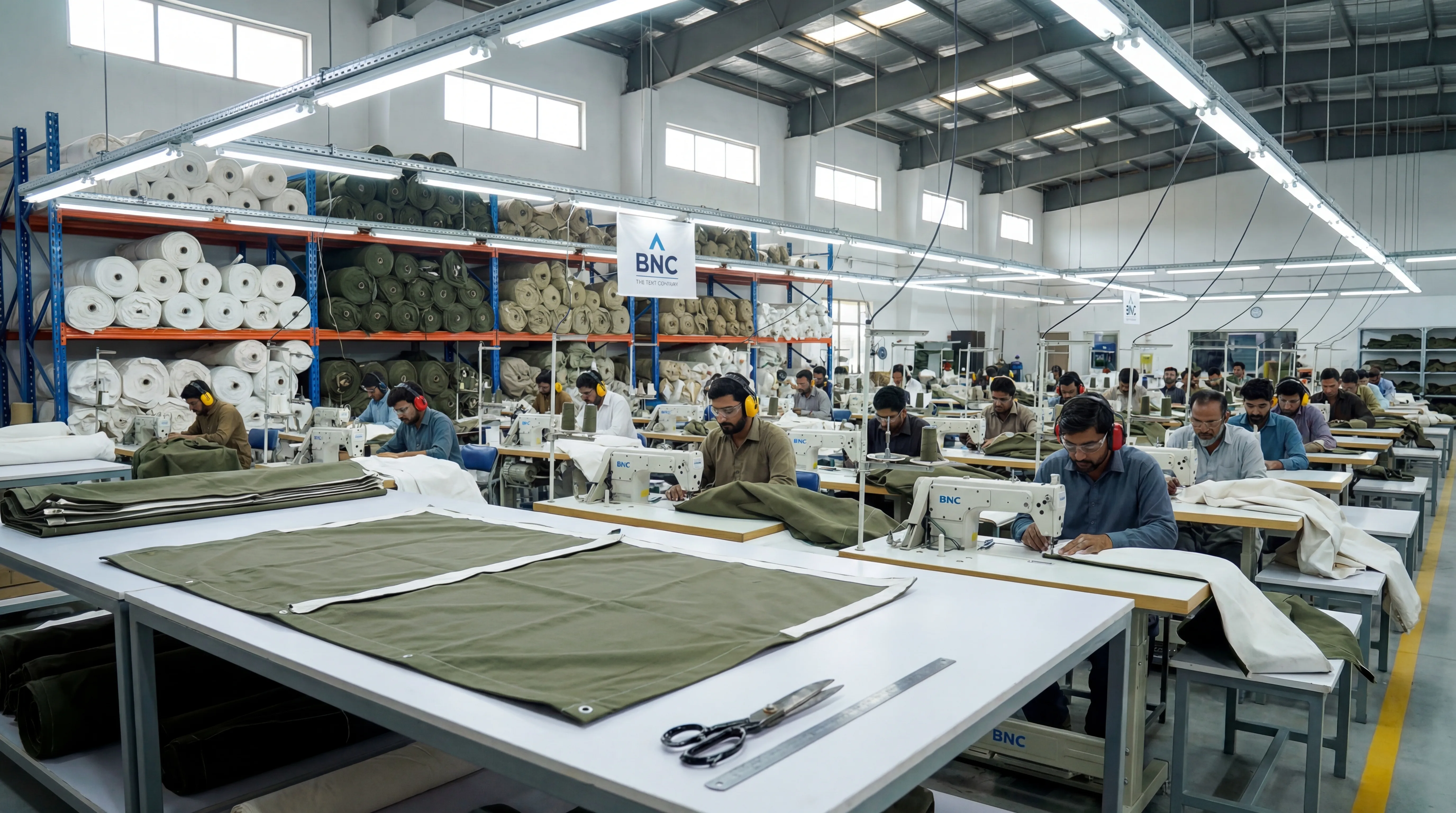
This is the most important distinction in tent procurement. A manufacturer owns the factory, employs the workers, controls the raw materials, and manages quality in-house. A trader buys from whoever has stock and adds a markup.
Here is how to tell which one you are dealing with:
- Ask for a factory tour. A manufacturer will invite you to walk through the production floor. A trader will make excuses or show you someone else's factory.
- Ask technical questions about the production process. How is the canvas treated? What machines are used for stitching? How is the galvanizing done? A manufacturer's sales team knows these answers because they see the process every day. A trader's team will have to "get back to you."
- Request production photos of your specific order. A manufacturer can send you photos of your tents being cut, sewn, and packed. A trader cannot, because they do not control the production.
- Check their address. Is it an industrial area with a factory, or a commercial office? You can verify this on Google Maps.
- Ask about production capacity and current lead times. A manufacturer knows exactly how many tents per week their lines produce and what their current backlog looks like.
Buying from a trader is not always wrong — sometimes they provide useful services like consolidating orders from multiple factories or handling complex logistics. But you should know what you are paying for. The price difference between buying from a manufacturer and buying through a trader is typically 15-30%.
Certifications that actually matter
Not all certifications are equal. Some are expensive and rigorous. Others are basically purchased documents. Here is what to look for:
ISO 9001
ISO 9001 certification means the manufacturer has a documented quality management system that has been audited by an independent body. It does not guarantee that the tents are good, but it guarantees that there are processes in place for quality control, inspection, corrective action, and continuous improvement. A factory without ISO 9001 is not necessarily bad, but a factory with it has at least committed to systematic quality management.
UN supplier registration (UNGM)
If you are procuring for humanitarian use, check whether the manufacturer is registered on the United Nations Global Marketplace (UNGM). Registration means they have passed a due diligence process and are eligible to participate in UN tenders. For disaster relief tent procurement, this is a strong signal.
Product testing certificates
These matter more than company-level certifications. Ask for test reports from an independent lab for the specific products you are buying. Key tests include fabric tensile strength, tear strength, waterproofing (hydrostatic head test), UV resistance, and fire retardancy. A serious manufacturer will have these on file and send them without hesitation.
What to ignore
Be skeptical of certifications you have never heard of, especially ones from organizations whose primary business is selling certifications. If a supplier lists a dozen logos on their website but cannot produce the actual certificates with audit dates, treat them as decoration.
How to verify quality before placing a large order
The only reliable way to verify quality is to see the product. Here is a practical process:
- Request samples. Order 1-3 tents before committing to a bulk order. Set them up. Check the stitching, the canvas feel, the pole quality, the packing. Most manufacturers charge for samples but credit the cost against a bulk order.
- Test the waterproofing. Spray the canvas with a hose for 10 minutes. Check inside for leaks, especially at seams and corners. Do this within the first week of receiving the sample.
- Check the metalwork. Scratch a pole with a coin. If you see bare steel under a thin coating, it is electro-galvanized or painted, not hot-dip galvanized. Hot-dip galvanized steel has a thick, slightly rough zinc layer that does not scratch off easily.
- Weigh the canvas. Cut a 10cm x 10cm sample and weigh it on a kitchen scale. Multiply by 100 to get GSM. Compare it to the stated specification. Discrepancies of more than 5% are a red flag.
- Set up the tent in wind. If possible, test the sample tent in actual weather. A tent that looks fine on a calm day may reveal problems in a 30 km/h wind.
MOQ considerations
Minimum order quantities (MOQs) vary by manufacturer and by product. Standard models that the manufacturer already produces will have lower MOQs — sometimes as low as 10-20 units. Custom specifications (different sizes, colors, materials, or branding) will have higher MOQs, often 50-100 units, because the manufacturer needs to set up custom cutting patterns, order specific dye lots, and adjust production lines.
If your order is below a manufacturer's MOQ, you have a few options: ask if they will make an exception (sometimes they will, with a price premium), combine your order with another buyer's, or accept a standard model that is close to what you need.
Lead times: what is realistic
Here are typical manufacturing lead times for tent orders:
- Stock models (in inventory): 1-7 days to pack and ship.
- Standard models (needs production): 2-4 weeks for orders under 500 units. 4-8 weeks for larger orders.
- Custom orders: 4-8 weeks including pattern development, sample approval, and production. Add 1-2 weeks for initial sample approval if this is a new design.
If a supplier promises to deliver 1,000 custom tents in one week, they are either lying or they are pulling from a different customer's production. Neither is a good sign.
Shipping and logistics
Tents are bulky. A single 40-foot shipping container holds roughly 200-300 family-size tents depending on the model. For sea freight, expect 4-6 weeks transit time from South Asia to Europe or North America. Air freight cuts transit to 3-5 days but costs 5-8 times more per kilogram.
Things to discuss with your manufacturer:
- Packing configuration: Are tents packed in bales that fit standard pallets? Can they be palletized for forklift handling?
- Shipping terms: FOB (you arrange shipping from the port), CIF (manufacturer arranges shipping to your port), or DDP (delivered to your door)? Know what you are comparing when evaluating quotes.
- Documentation: Packing lists, certificates of origin, test certificates, and customs paperwork should be ready before the shipment. Delays in documentation can hold your cargo at customs for weeks.
Red flags to watch for
After 30 years in this industry, here are the warning signs we have learned to recognize:
- Prices that are too low. If a quote is 30% below everyone else, the quality is going to be 30% below too. Or the supplier is planning to substitute cheaper materials after you place the order.
- No factory address or a factory that is impossible to visit. Every legitimate manufacturer is proud of their facility. If they will not show it to you, ask yourself why.
- Samples that do not match production. Some suppliers send a perfect hand-made sample and then deliver machine-produced tents at lower quality. Ask for a production-line sample, not a showroom sample.
- No independent test reports. If a manufacturer cannot produce lab reports for fabric strength, waterproofing, and other specs, they have not had their products tested. Period.
- Payment terms that require 100% upfront. Standard terms in the industry are 30% deposit with the order and 70% before or upon shipment. A supplier demanding full payment upfront may not have the cash flow to buy raw materials, which is not a company you want to depend on.
- Communication that goes silent after payment. If a supplier is responsive during the sales process and then becomes hard to reach after receiving your deposit, escalate immediately.
A note on price vs value
Procurement officers are often under pressure to choose the lowest-priced bid. In tent procurement, this can be a costly mistake. A tent that fails in the field — leaking in rain, collapsing in wind, rotting within months — creates costs far exceeding the savings on the purchase price. Replacement costs, shipping costs, logistics costs, and most importantly, the cost to the people who were depending on that shelter.
The right approach is to set a clear technical specification, verify that each bidder can actually meet it, and then compare prices among the qualified suppliers. The cheapest tent that meets spec is the right buy. The cheapest tent regardless of spec is usually a false economy.
If you are evaluating manufacturers and want to include us in the comparison, we welcome that. We are a direct manufacturer with ISO certification, UN registration, and 30 years of production history. We are happy to provide samples, factory tour access, and detailed technical documentation.