Disaster Relief Tent Procurement: Standards, Suppliers, and What to Expect
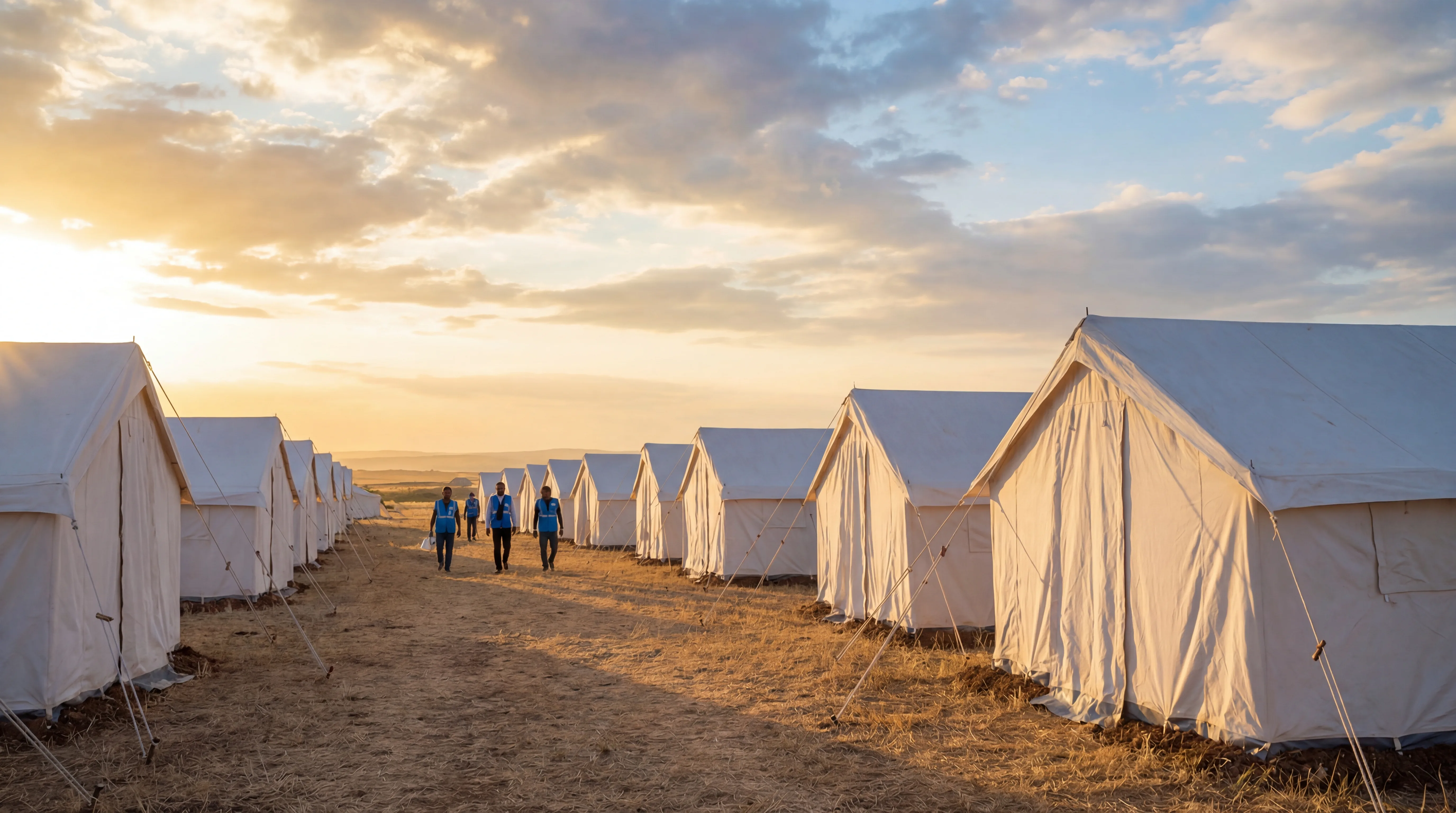
Procuring disaster relief tents is not like buying office supplies. You are buying a product that will be the primary shelter for displaced families, often in extreme weather, often under time pressure that does not allow for mistakes. The procurement process has specific standards, qualification requirements, and logistical realities that you need to understand before you start writing purchase orders.
We have been on the supply side of this process since 1994, filling orders for UNHCR, ICRC, UNICEF, OXFAM, and dozens of national disaster management authorities. Here is how the process actually works from the inside.
How procurement works for relief tents
The procurement process depends on who is buying. UN agencies, the Red Cross/Red Crescent movement, and large international NGOs each have their own procurement systems, but the general flow is similar:
- Needs assessment: A field office identifies the number of families needing shelter, the climate conditions, and the urgency level.
- Specification selection: The procurement team selects the appropriate tent specification (UNHCR family tent, ICRC relief tent, winterized variant, etc.).
- Supplier selection: The buyer either draws from a pre-qualified supplier roster or issues a formal tender (Request for Quotation).
- Order placement: A purchase order is issued with delivery deadlines, quality requirements, and shipping instructions.
- Pre-shipment inspection: For large orders, an independent inspector visits the factory to verify quality before shipment.
- Shipping and delivery: Tents are shipped by sea (for planned orders) or air (for emergencies) to the destination country.
For emergency orders — after an earthquake, flood, or sudden displacement — steps 2 through 6 can happen within 48 to 72 hours. That is why manufacturers like us maintain ready stock of standard relief tent models.
UNHCR, ICRC, and IFRC standards explained
The three main standards for disaster relief tents come from UNHCR, ICRC, and IFRC. They are similar in principle but differ in specific technical requirements.
UNHCR (UN Refugee Agency)
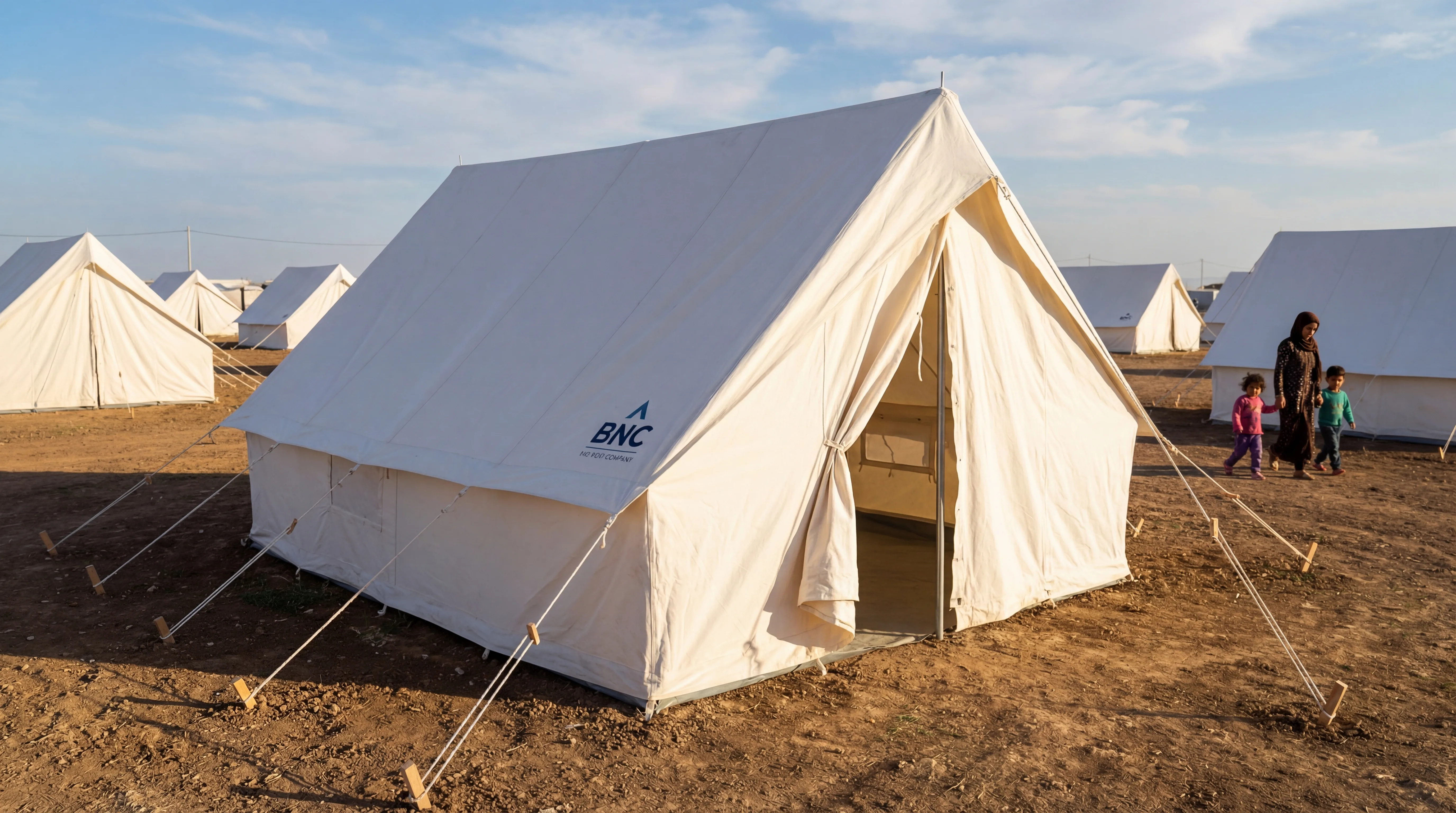
UNHCR publishes detailed product specifications for all shelter items it procures. For family tents, the key requirements include: cotton canvas minimum 350 GSM, waterproofing to 450mm hydrostatic head, wind resistance to 72 km/h, minimum 3.5 square meters of floor area per person, and UV resistance tested to 500 hours of accelerated exposure. UNHCR specifications also cover packaging (bales must fit standard cargo pallets), labeling (tent number, production date, manufacturer), and included accessories (poles, pegs, ropes, repair kit).
ICRC (International Committee of the Red Cross)
ICRC has its own tent specification that differs slightly from UNHCR's in dimensions and design. The ICRC family tent is typically 4m x 4m (compared to UNHCR's 4m x 6m). Material requirements are similar — cotton canvas, treated for water and mildew resistance, with galvanized steel frames. ICRC places particular emphasis on rapid setup time and on the tent's performance in windy conditions.
IFRC (International Federation of Red Cross and Red Crescent Societies)
IFRC coordinates procurement across national Red Cross and Red Crescent societies worldwide. Their tent specifications are aligned with ICRC standards but may include additional requirements depending on the region of deployment. IFRC maintains emergency stockpiles in strategic locations and contracts with manufacturers to replenish those stockpiles.
We manufacture relief tents to all three standards. The differences between them are mainly dimensional — the core material and quality requirements are consistent across all three.
The pre-qualification process
Before you can supply tents to UN agencies or the Red Cross, you need to be pre-qualified. This is not a formality — it is a thorough vetting process.
For UNHCR, pre-qualification involves:
- Registration on the UN Global Marketplace (UNGM)
- Submission of company documents: registration certificates, financial statements, ISO certification, production capacity details
- Product samples for independent testing against UNHCR specifications
- Factory audit by UNHCR or a designated inspection agency
- Reference checks from previous humanitarian clients
The entire pre-qualification process can take 6 to 12 months. Once qualified, you are placed on the UNHCR supplier roster and can participate in tenders and receive direct purchase orders. Qualification is typically reviewed every 2-3 years.
This is why the pool of qualified relief tent manufacturers is smaller than you might expect. There are many companies that make tents, but the number that have actually passed UNHCR or ICRC pre-qualification and maintained it over multiple review cycles is limited to a few dozen globally.
Stock vs custom orders
Relief tent procurement falls into two categories: stock orders and custom orders.
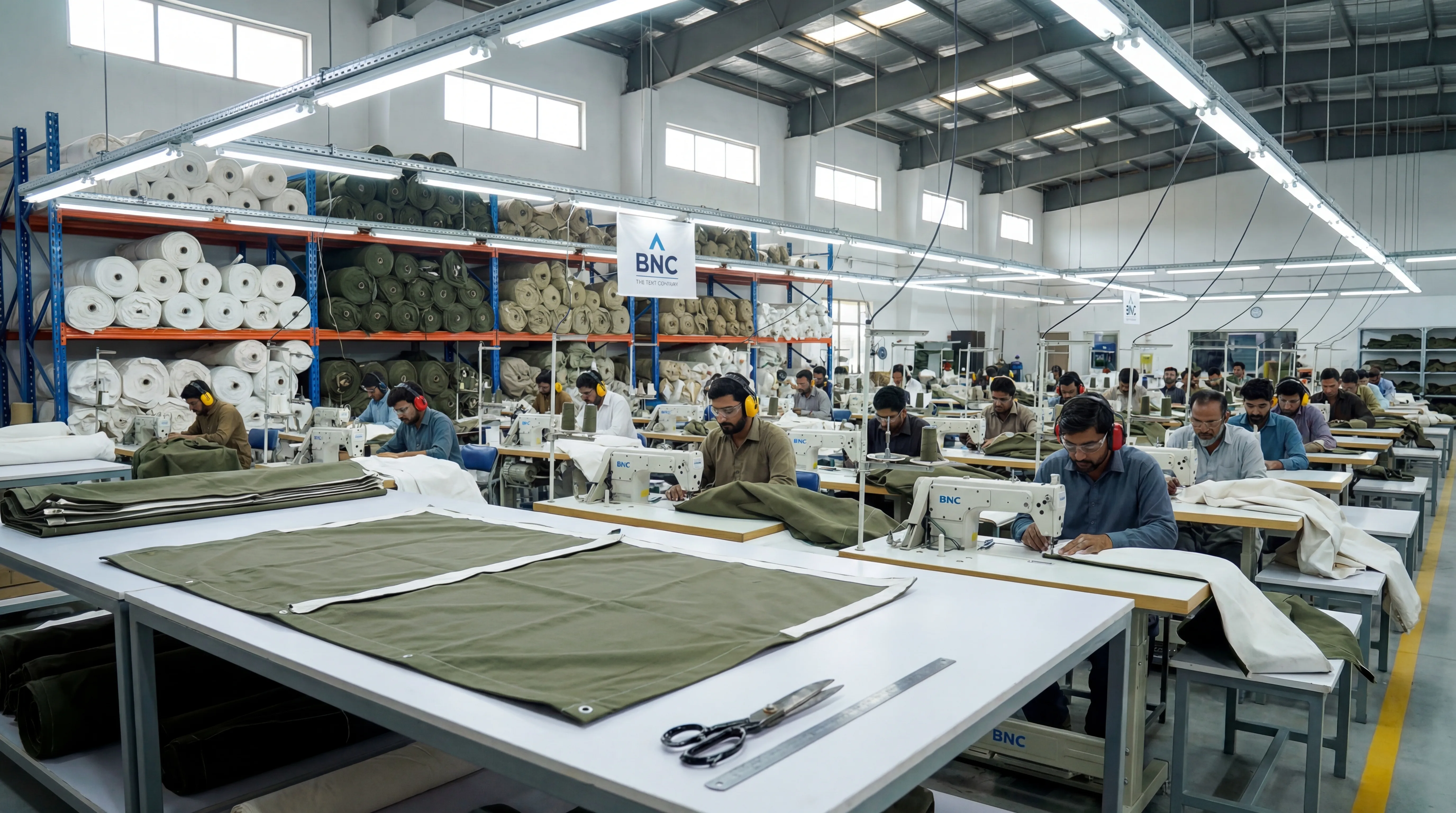
Stock orders draw from existing inventory. At our facility in Karachi, we maintain rolling stock of standard UNHCR family tents, ICRC relief tents, and winterized tents. When an emergency order comes in, we can pack and dispatch within 24 to 72 hours. Stock orders are used for emergency response when time is the priority.
Custom orders are for planned procurement — replenishing agency stockpiles, pre-positioning for an anticipated disaster season, or ordering tents with specific modifications (custom branding, different dimensions, additional features). Custom production takes 2 to 6 weeks depending on quantity.
The strategic approach most agencies use is to maintain a base stock of standard tents for immediate emergency response, then replenish that stock through custom production orders during non-emergency periods.
Airlift logistics
When a disaster strikes, the first shipments of relief supplies usually go by air. Here is what that looks like for tents:
A standard UNHCR family tent (4m x 6m) weighs approximately 85 kg packed. A C-130 Hercules cargo aircraft can carry roughly 20 metric tons, which translates to about 230 family tents per flight. A Boeing 747 freighter can carry about 100 metric tons — around 1,150 tents.
Air freight from Karachi to most destinations in the Middle East, Africa, or South Asia takes 6 to 24 hours of flight time, plus loading and customs clearance. The total turnaround from order to delivery at the final destination is typically 48 to 96 hours for emergency airlifts.
Our factory's location in Karachi is a logistical advantage — the city has an international airport with regular cargo traffic and one of the largest seaports in South Asia. When UNHCR needs tents in Afghanistan, we are a 2-hour flight away. For East Africa, it is about 5 hours.
Sea freight is used for larger, non-emergency orders. A 40-foot container holds approximately 200-300 family tents. Transit time from Karachi to European ports is about 3-4 weeks, to East African ports about 2 weeks, and to Southeast Asian ports about 2-3 weeks.
Cost factors
The cost of a disaster relief tent depends on several factors:
- Tent model and size: A standard family tent costs less than a winterized tent (which has double-layer canvas and thermal lining). Larger tents use more materials.
- Quantity: Larger orders have lower per-unit costs because fixed production setup costs are spread across more units.
- Material specifications: Higher GSM canvas, fire-retardant treatment, or PVC components increase the material cost.
- Customization: Branding, non-standard colors, custom dimensions, and additional accessories add to the price.
- Shipping method: Air freight can be 5-8 times more expensive than sea freight per kilogram. For a single family tent weighing 85 kg, the difference between air and sea freight can be hundreds of dollars.
- Destination: Shipping to landlocked countries requires additional overland transport from the nearest port.
As a direct manufacturer, our pricing does not include trading company markups. We quote factory prices that include the complete tent kit (canvas, frame, pegs, ropes, repair kit). Shipping is quoted separately based on destination, mode of transport, and Incoterms.
Working with national disaster agencies
Not all relief tent procurement goes through UN agencies. National disaster management authorities (NDMAs) in many countries procure tents directly from manufacturers for their national emergency stockpiles. The process is typically a formal tender published on government procurement portals.
These tenders may reference international standards (UNHCR, ICRC) or specify national standards that differ in dimensions, materials, or accessories. We have supplied custom-spec tents to NDMAs across the Middle East, Central Asia, and Africa.
Government procurement tends to move slower than agency procurement — expect 2 to 6 months from tender publication to order placement. But the volumes can be substantial, with orders of 5,000 to 50,000 tents in a single contract.
What to expect as a first-time buyer
If you are new to relief tent procurement, here is a realistic timeline for your first order:
- Week 1-2: Research specifications and identify potential manufacturers. Request quotes from 3-5 suppliers.
- Week 3-4: Review quotes, ask technical questions, request samples from top 2-3 candidates.
- Week 5-8: Receive and evaluate samples. Set up a sample tent and test it.
- Week 9-10: Negotiate final terms, agree on specification, place order with deposit.
- Week 11-16: Production (2-6 weeks depending on quantity). Pre-shipment inspection if required.
- Week 17-20: Shipping (sea freight). Add 1 week for customs clearance at destination.
For emergency procurement, this timeline compresses dramatically — we have gone from initial contact to tents on a plane in under 48 hours. But for planned procurement, allow 4-5 months from start to delivery.
If you have questions about the procurement process or want to discuss your specific requirements, we are available to walk you through it. Thirty years of doing this means we have seen every scenario and can help you avoid the common mistakes.