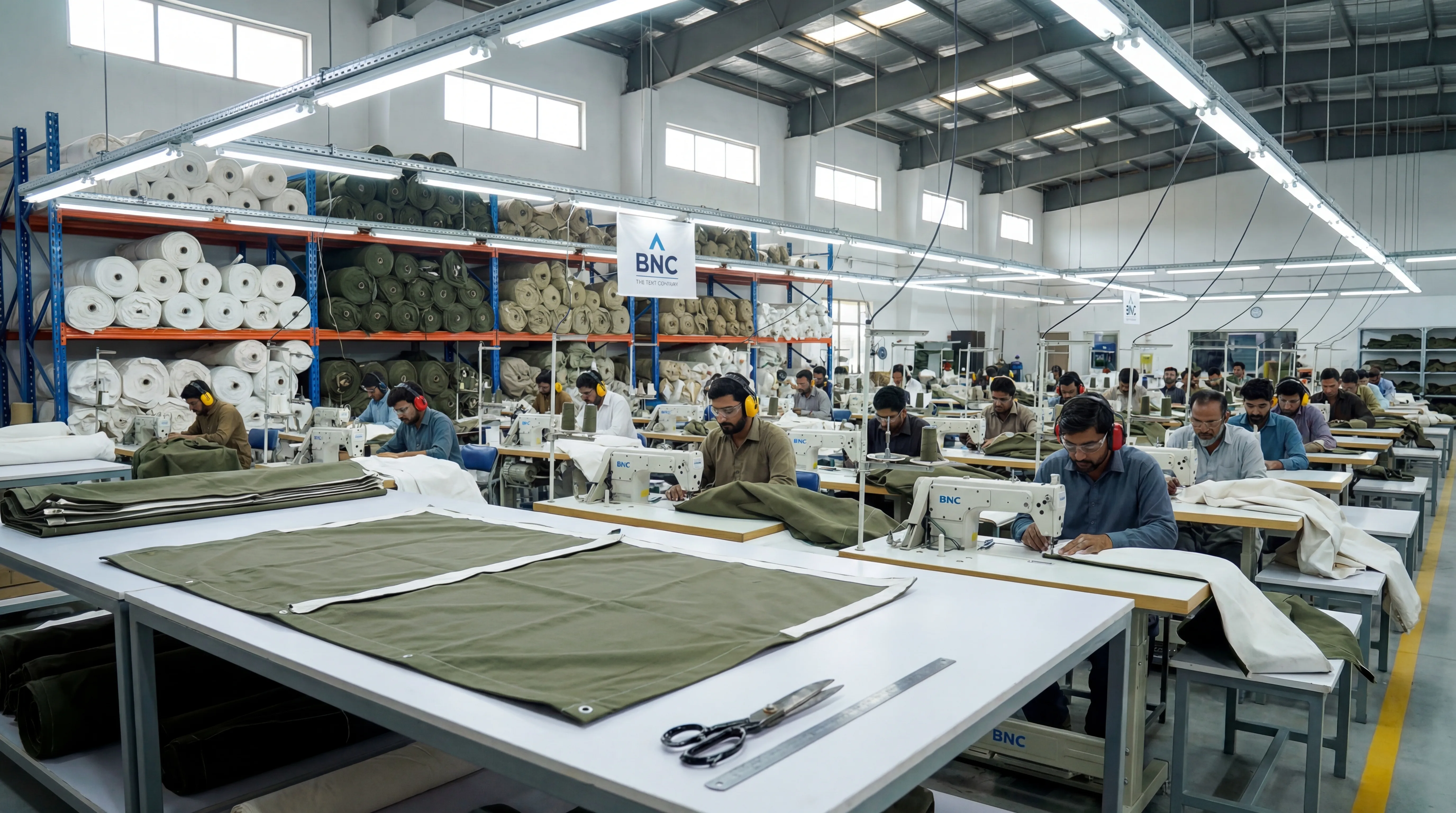
Inside BNC's tent manufacturing facility in Karachi, Pakistan — industrial sewing machines, canvas cutting tables, and production lines
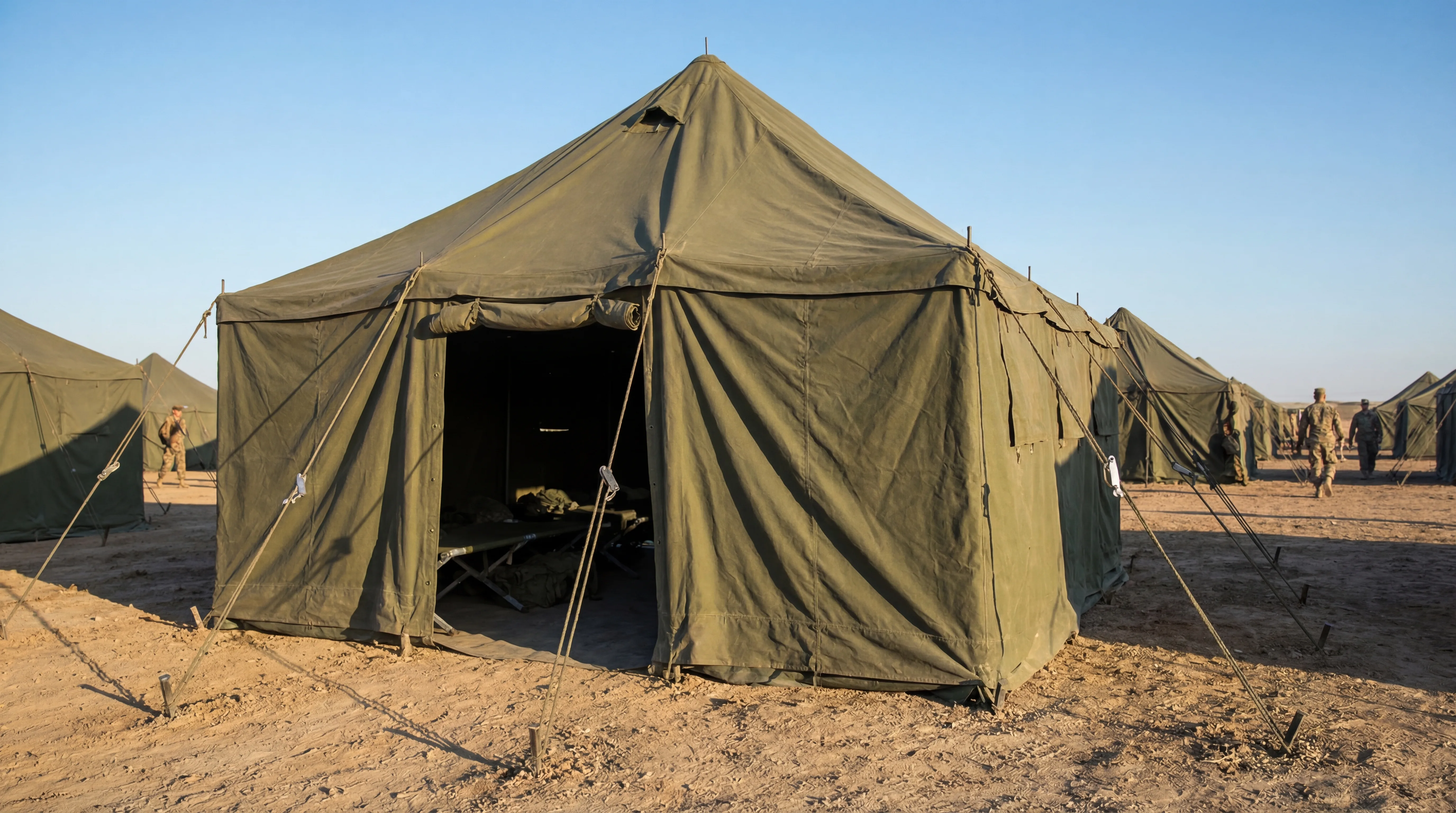
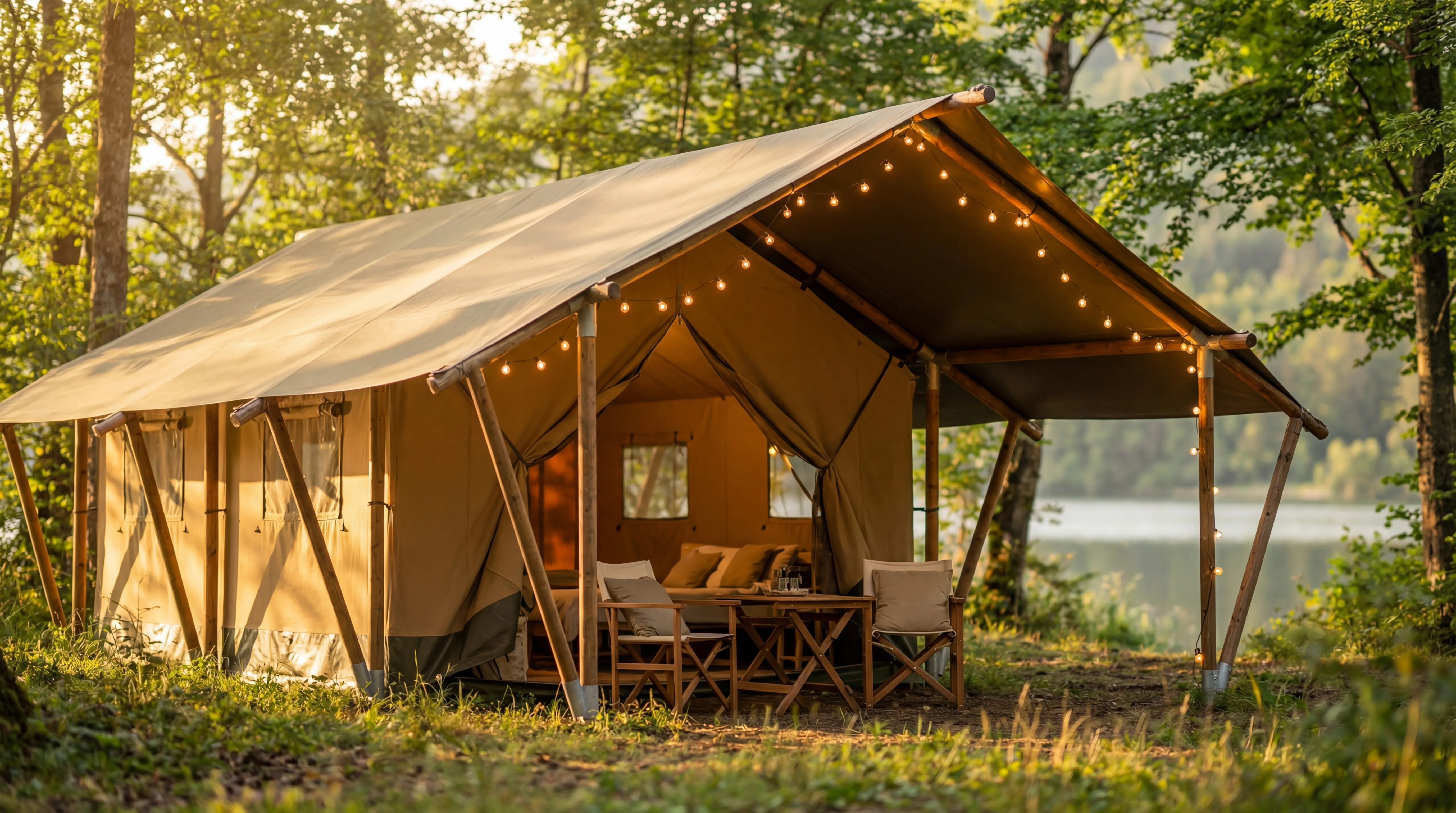
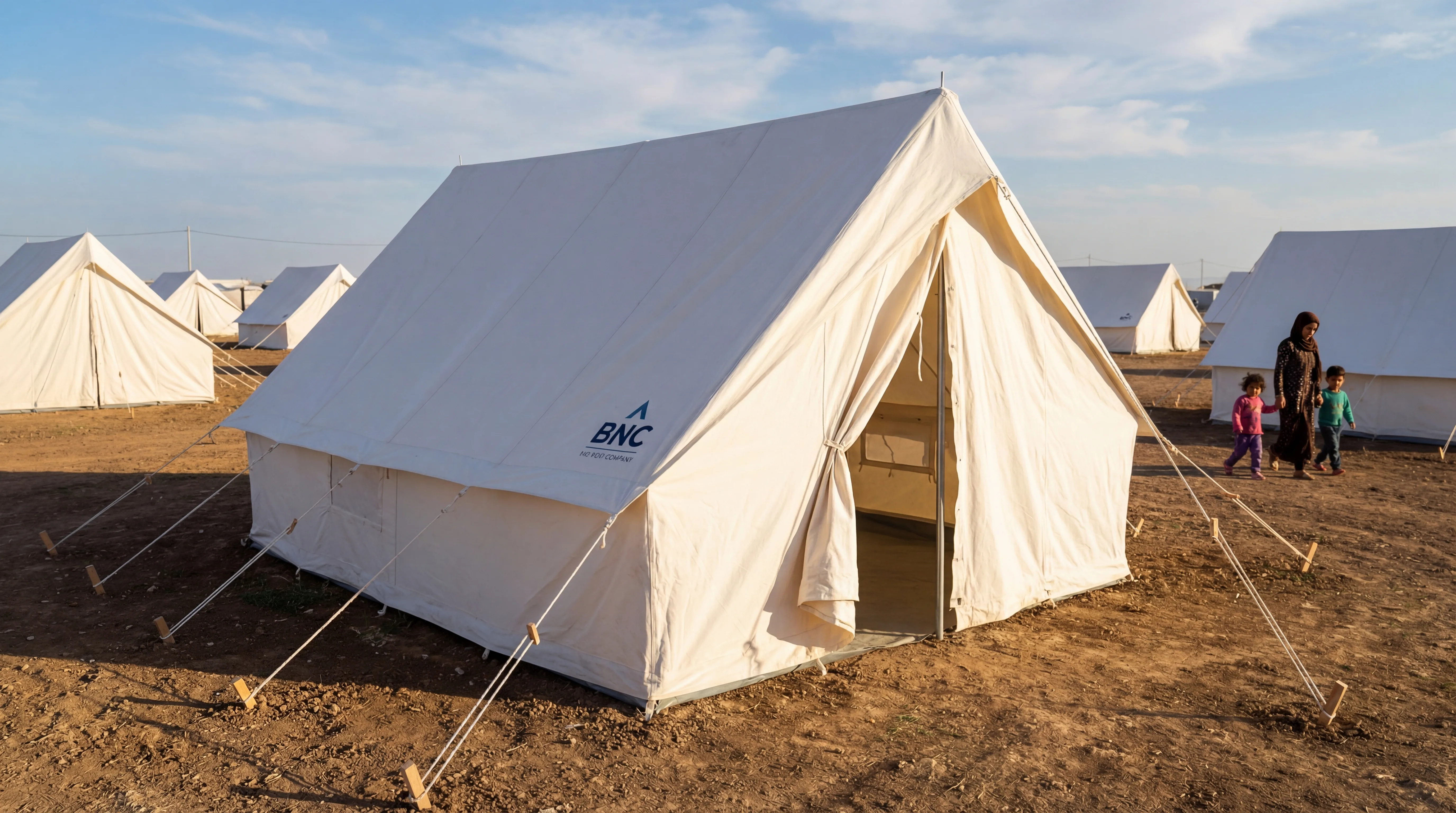
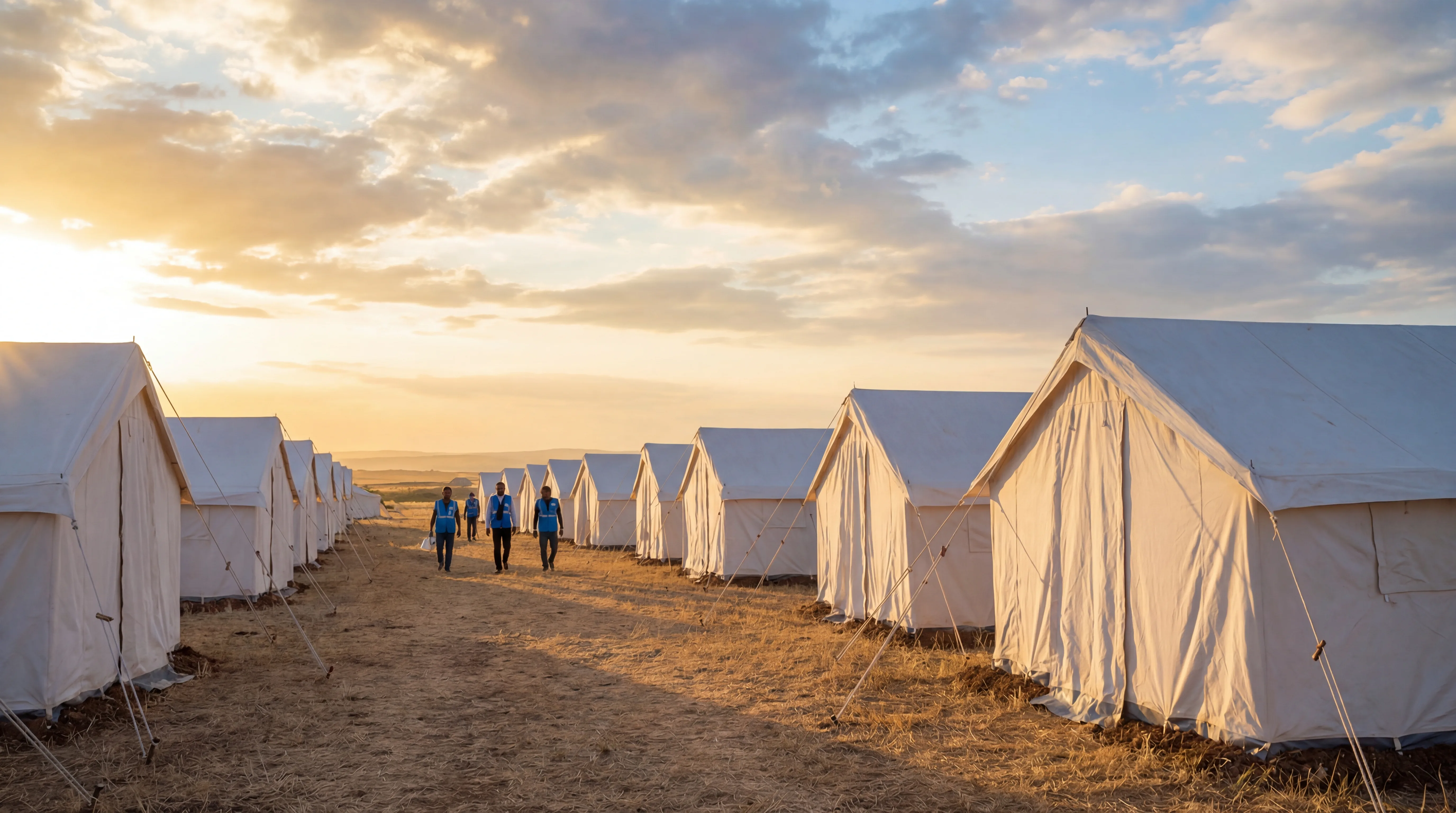
BNC disaster relief tents deployed in the field — rows of cotton canvas shelters at golden hour BNC military tent in olive green cotton canvas — heavy-duty field shelter BNC safari frame tent — cotton canvas glamping tent for eco-resorts
EST. 1994 ISO CERTIFIED UN REGISTERED

About BNC — Tent Manufacturer Since 1994

Babson & Noller Corporation is a tent manufacturer headquartered in Karachi, Pakistan. Founded by Syed Rayhan Ahmad in 1994, we have spent three decades building tents for humanitarian organizations, militaries, and commercial clients across 50+ countries.

1994
Founded
30+
Years Mfg.
50+
Countries
Contact Us

Or call +92 300 823 9990

Trusted by

UNHCR ICRC UNICEF OXFAM Red Cross

How BNC started — and how we became one of Pakistan's largest tent manufacturers

In 1994, Syed Rayhan Ahmad set up a small tent workshop in Karachi. Pakistan had a long history of tent making — the country's cotton canvas industry, its proximity to conflict zones that needed shelters, and its established textile labor force made it a natural base for the business. But the tent market at the time was fragmented. Dozens of small workshops produced tents with inconsistent quality, and international buyers had to deal with unreliable supply chains and spotty quality control.

Rayhan's idea was straightforward: build a proper manufacturing operation. Not a workshop, but a factory with industrial equipment, trained operators, quality checkpoints, and the capacity to take on large orders from international organizations. The first major contracts came from humanitarian agencies that were sourcing tents for Afghan refugee camps in the mid-1990s. Those early orders taught BNC what international buyers actually needed — not just tents, but consistent tents. Every unit in a shipment of 500 had to match the specification exactly. The seams had to be identical. The waterproofing treatment could not vary between batches. The packing had to fit on standard cargo pallets.

Over the next decade, BNC grew from that workshop into a full-scale manufacturing operation. We invested in industrial sewing machines built for heavy canvas, automated canvas cutting tables, in-house waterproofing and treatment lines, steel fabrication for tent frames, and warehousing for ready stock. Each of those investments was driven by a specific need from our clients. The UNHCR wanted faster delivery times, so we built warehouse capacity to keep stock on hand. The ICRC needed tents that could survive Central Asian winters, so we developed our double-layer winterized tent with quilted thermal lining. Military clients needed blackout fabric and blast-resistant configurations, so we set up a dedicated military tent production line.

Today, 30 years later, the operation has grown into something Rayhan could not have imagined in 1994. But the core idea is the same: own the manufacturing, control the quality, and deliver on time.

Manufacturing capabilities

Our manufacturing facility in Karachi covers the entire tent production process in-house. We do not outsource to subcontractors. This is a deliberate choice — it lets us control quality at every step and respond quickly when a client needs changes to a specification.

The factory runs several dedicated production lines, each set up for a specific tent category. The relief tent line handles UNHCR, ICRC, and IFRC specification tents. The military line produces heavy-duty field shelters, command tents, and storage tents in olive drab and camouflage canvas. The camping and commercial line makes safari tents, party tents, dome tents, and Kuwaiti tents. Keeping these lines separate is not just organizational — the sewing techniques, canvas treatments, and frame specifications are different for each category, and the operators on each line develop deep expertise in their particular products.

Raw materials start at the canvas stage. We use cotton canvas ranging from 280 GSM for lighter camping tents to 380 GSM for relief and military tents. The canvas is treated in-house for waterproofing, rot resistance, fungus resistance, and UV protection. We apply these treatments before cutting — not after — because post-cut treatment misses the interior of seam edges, which is where most tent failures actually start.

Canvas is cut on industrial tables using CNC-guided patterns specific to each tent model. Pieces move to the sewing lines where operators stitch them on heavy-duty machines designed for thick canvas. Seams get double-stitched and sealed with waterproof tape. Grommets, zippers, and reinforcement patches are applied at dedicated stations.

Steel and aluminum frames are fabricated on site. Steel poles get galvanized (zinc-coated to prevent rust) and hot-dip treated. Aluminum components are anodized. Pegs, guy-ropes, and tensioners are sourced to our specification and included with every tent.

Every finished tent goes through a quality inspection before packing. We check canvas weight and treatment, seam integrity, waterproofing, dimensional accuracy, frame fit, and packing completeness. Tents that do not pass inspection get reworked or rejected — they do not ship. This sounds obvious, but it is the step that most small manufacturers skip when they are under pressure to deliver on a deadline.

The facility also includes warehousing for ready stock. We keep commonly ordered models — UNHCR family tents, ICRC relief tents, winterized tents, and standard military tents — in stock at all times. This allows us to fulfill urgent orders within 24 to 72 hours, which matters enormously in disaster response situations.

BNC tent manufacturing factory floor in Karachi, Pakistan — industrial sewing machines and canvas production lines

Certifications and clients

ISO Certified

BNC holds ISO certification for our manufacturing processes. This covers quality management, production consistency, and documentation. ISO certification is required by most international organizations before they will add a supplier to their procurement roster.

UN Registered Supplier

We are registered as a supplier with UNHCR (UN Refugee Agency), UNICEF, and UNDP. Registration involves factory audits, product testing, and compliance verification. These are not self-declared credentials — they are verified by the agencies themselves.

UNHCR & UNICEF

Our longest-standing client relationships. We have supplied family tents, relief tents, and winterized shelters to UNHCR operations across the Middle East, Africa, and South Asia. UNICEF orders include school tents, medical facility tents, and child-friendly spaces.

ICRC & Red Cross

We manufacture tents to ICRC and IFRC specifications for the International Committee of the Red Cross and national Red Cross/Red Crescent societies. These tents are deployed in active conflict zones where quality and durability are not optional.

OXFAM & Muslim Aid

Both organizations order from BNC for their disaster response operations. OXFAM in particular has strict supplier standards around material sourcing, labor conditions, and environmental impact. We meet those standards.

ADRA & MDM

Adventist Development and Relief Agency (ADRA) and Medecins du Monde (MDM) are among our humanitarian clients. ADRA orders include relief shelters and storage tents. MDM orders focus on medical facility tents for field clinics and vaccination centers.

Global reach — 50+ countries and counting

BNC tents are deployed in over 50 countries. That is not a marketing number — it is a count of the distinct destinations we have shipped to since 1994. The list includes active conflict zones (Syria, Yemen, Afghanistan, Sudan), earthquake and flood response areas (Pakistan 2005 and 2010, Nepal 2015, Turkey 2023), refugee camp operations (Jordan, Kenya, Bangladesh, Uganda), and commercial markets (UK, Germany, Netherlands, Australia, South Africa, UAE, Kuwait).

Our Karachi location gives us a logistics advantage that is hard to replicate. The city has Pakistan's largest seaport and an international airport with regular cargo flights. We are closer to the Middle East and East Africa than any tent manufacturer in China, and our sea freight routes to Europe are well-established and competitive. When a disaster hits and the UNHCR needs tents airlifted to East Africa within 48 hours, our proximity to Karachi's air cargo facilities means we can deliver.

The Middle East is our strongest regional market outside of South Asia. Kuwait, Saudi Arabia, Qatar, UAE, and Iraq all receive regular shipments — a mix of relief tents for humanitarian operations and commercial tents (Kuwaiti tents, party tents) for the private market. We understand the logistics, customs requirements, and market preferences for this region better than most competitors.

Africa is our second-largest export region. We ship relief tents to UN and NGO operations across East Africa, the Horn of Africa, and the Sahel. Commercial orders go to South Africa, Kenya, Tanzania, and Nigeria for camping, events, and hospitality. The shipping corridor from Karachi to Mombasa is one we use monthly.

In Europe, our primary markets are Germany, the Netherlands, the UK, France, and Scandinavia. European buyers typically order camping tents, safari tents for glamping operations, and event tents. The quality expectations are high and the regulatory environment is strict — both of which suit us well. We are not the cheapest option on the market, and we do not try to be. European buyers who come to us are looking for consistent quality and reliable supply, and that is what we deliver.
Why buying direct from the manufacturer matters

The tent market has layers of middlemen. Between the factory floor and the end buyer, there are typically agents, trading companies, and distributors — each adding their margin. By the time a tent reaches a campsite in the Netherlands or a refugee camp in Kenya, it might have passed through two or three hands, each one adding 10-20% to the cost without adding any value to the product.

When you buy from BNC, you are buying from the people who actually make the tent. We own the factory. We employ the workers. We purchase the raw cotton canvas. We run the sewing machines. We weld the frames. We inspect the finished product. We load it onto the truck. There is no middleman in this chain.

The cost advantage is obvious — you save whatever margin the middleman would have taken. But the less obvious advantage is communication. When you want to modify a tent specification, you are talking to the person who can walk to the production floor and make it happen. You are not playing telephone through an agent who may not fully understand the technical details. When you have a quality issue, you are dealing with the factory that produced it, not a sales office that will have to contact the factory on your behalf.

This direct relationship also means better accountability. A trading company can switch factories without telling you. Your second order might come from a completely different production facility than your first one. With BNC, your tents always come from the same factory, built by the same teams, to the same standards. Consistency is not something we promise in a brochure — it is a structural feature of buying direct.

We encourage prospective buyers — especially those placing their first large order — to visit our factory in Karachi. See the production lines, meet the team, and inspect the quality firsthand. Many of our long-term clients made their first visit before their first order. It builds confidence, and it starts a relationship based on transparency rather than brochures.

What we manufacture

Five product categories, each with a dedicated production line. All made in-house at our Karachi facility.

Common questions about BNC

Where is BNC located?
Our head office is at C-86, Block-2, Clifton, Karachi, Pakistan. Our manufacturing facility is also in Karachi, strategically located near the city's international airport and seaport. This location keeps logistics fast — whether we are airlifting tents for a disaster response or loading a sea freight container for a European customer, everything is within a short drive from the factory.
How long has BNC been manufacturing tents?
BNC was founded in 1994 by Syed Rayhan Ahmad. That is over 30 years of continuous tent manufacturing. In that time we have supplied tents for major humanitarian crises — the Afghan refugee camps in the 1990s, the 2005 Pakistan earthquake, the 2010 Pakistan floods, the Syrian refugee crisis, the 2023 Turkey-Syria earthquake — as well as commercial clients on every continent except Antarctica.
What certifications does BNC have?
We are ISO certified for our manufacturing processes. We are registered as a supplier with UNHCR, UNICEF, and UNDP — registration involves factory audits, product testing, and compliance verification by the agencies themselves. We also work directly with ICRC, IFRC, Red Cross, OXFAM, Muslim Aid, ADRA, and Medecins du Monde, all of which have their own supplier qualification requirements.
Do you sell directly or through distributors?
We sell directly from our factory. BNC is a manufacturer, not a trading company. You deal with us, and we deal with the production floor. This means factory pricing without middleman markups, direct communication when you need specification changes, and accountability for quality. We welcome factory visits from prospective clients who want to see the operation before placing an order.
What is your production capacity?
Our facility runs multiple dedicated production lines for different tent categories. In standard operation, we produce hundreds of tents per month across all categories. For emergency orders — which happen regularly in the humanitarian sector — we activate additional shifts and temporary production capacity. During major disaster responses, we have scaled output significantly within days to meet urgent UNHCR and ICRC requirements. We also keep ready stock of the most commonly ordered models for immediate shipment.

Explore our products

Want to work with us?

Whether you need 50 camping tents or 5,000 relief shelters, we have the manufacturing capacity and the track record. Tell us what you need.

Contact Us

or call +92 300 823 9990

Contact Us Call Now